

Australia’s Most Common Driving Theory Practice Test Mistakes, Revealed by State
By EzLicence · Last updated 27 Mar 2026
Sitting your driving theory test can be nerve-wracking, and thousands of Australians get caught out by the same tricky questions each year. But how many of us, even as experienced drivers, would still pass if we had to take the test today?
To find out which questions cause the most trouble, and how results differ across states and territories, we analysed data from thousands of practice theory tests completed on the EzLicence platform. The findings show the most common learner mistakes - and might just inspire experienced drivers to test themselves too.
If you’ve stumbled on your theory test before, you’re not alone. A little extra practice can boost your confidence before the real test - and for experienced drivers, it’s a chance to check your knowledge and make sure you’re still up to speed with the rules.
Most Common Practice Theory Test Mistakes Across Australia
To see which topics learners struggle with most, we identified the categories with the highest rates of incorrect answers. Here’s what challenged learners nationwide.
| Rank | Category | Incorrect Response Rate |
|---|---|---|
| 1 | Speed Limits | 21.2% |
| 2 | Vehicle Equipment Use | 20.3% |
| 3 | Night Driving & Visibility | 18.8% |
| 4 | Intersections & Right of Way | 18.4% |
| 5 | Parking & Stopping | 17.1% |
| 6 | Vehicle Positioning | 15.8% |
| 7 | Road Markings & Traffic Lights | 14.6% |
| 8 | Licence Conditions & Restrictions | 14.5% |
| 9 | General | 13.4% |
| 10 | Hazards | 13.3% |
Mistakes were most common on speed limit questions, likely because limits vary by road type and rules vary around school zones and roadworks.
One in five responses on vehicle equipment use – such as headlights, indicators, or fog lights – were incorrect, while night driving and visibility questions had an 18.8% error rate.
Intersections and right-of-way questions had an 18.4% error rate, and parking and stopping sat at 17.1%, highlighting areas where practical judgement and diagram interpretation are required.
With each state’s theory test reflecting local road rule differences, the question is: which topics challenge learners the most — and where might even experienced drivers struggle?
The Most Common Practice Theory Test Mistakes in New South Wales
Based on results from our NSW practice Driver Knowledge Test, these were the questions most often answered incorrectly.
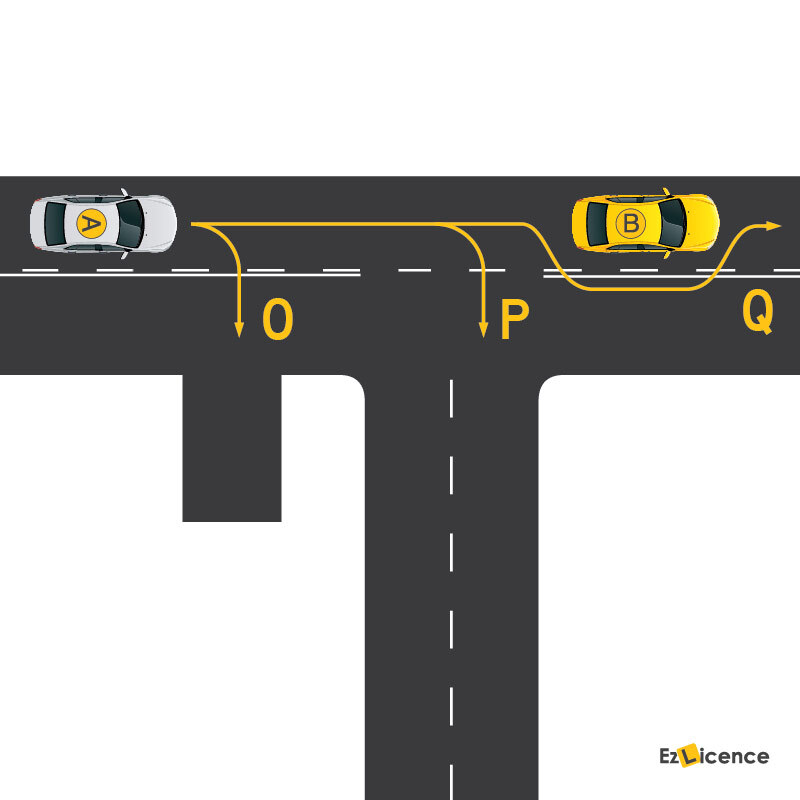
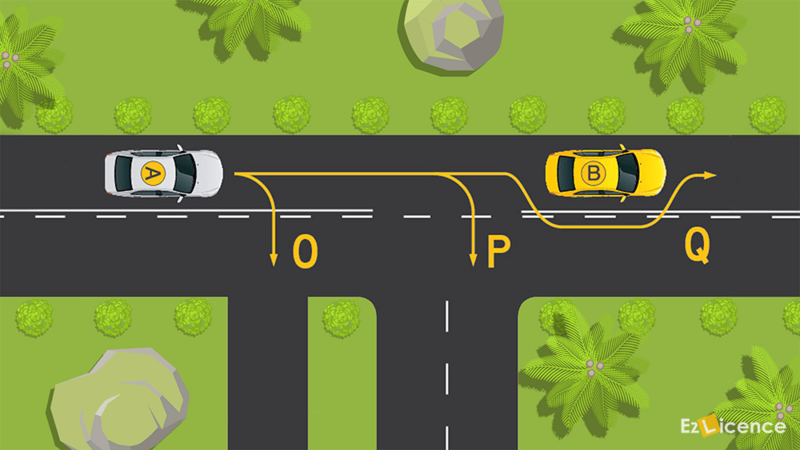
- Which movement shown in the diagram can legally be made by the driver of Vehicle A? -> 53.2% incorrect response rate
- You drive up to an intersection with a stop sign. There is no painted stop line. Where should you stop? -> 51.3% incorrect response rate

- Which movements shown in the diagram can be legally made by the driver of vehicle A? -> 49.4% incorrect response rate
- You are driving at night, and there is no other traffic around you. When can you use your headline on high beam? -> 43.7% incorrect response rate
- Looking at the diagram, which vehicle must give way? -> 41.6% incorrect response rate
More than one in two responses from NSW learners were incorrect on legal vehicle movements (53.2%) and stopping at intersections without a painted line (51.3%) were incorrect.
Night driving tripped up 43.7% of answers, while giving way questions had a 41.6% error rate.
Other challenging topics included flashing amber pedestrian lights (41% incorrect), safe distances from bus stops or railway crossings (38.1% incorrect), and licence rules for a 10-seat van (34.7% incorrect). Towing rules caused mistakes for around one in four answers (26.9%).
The Categories NSW Learners Failed The Most
| Rank | Category | Incorrect Response Rate |
|---|---|---|
| 1 | Night Driving & Visibility | 19.8% |
| 2 | Intersections & Right of Way | 16.0% |
| 3 | Vehicle Positioning | 15.7% |
| 4 | Road Markings & Traffic Lights | 14.6% |
| 5 | Overtaking & Lane Use | 12.8% |
At a category level, NSW learners struggled most with night driving and visibility, with roughly one in five attempts (19.8%) incorrect. Intersections and right-of-way followed, with errors in 16% of responses, while vehicle positioning mistakes appeared in 15.7% of answers. Road markings and traffic lights were incorrect in 14.6% of attempts, and overtaking and lane use had a 12.8% error rate.
The Most Common Practice Theory Test Mistakes in South Australia
Based on results from EzLicence’s SA practice Learner Theory Test, these were the questions learners most often answered incorrectly.
- At which one of the following places are U-turns permitted? -> 58.8% incorrect response rate
- At intersections that have traffic lights showing a green right turn arrow and when it is safe.
- On a freeway.
- In an intersection where a 'Stop' or 'Give Way' sign is displayed
- Alcohol is a major contributor to approximately 30% of motor vehicle crashes where serious injuries or fatalities occur. What is the increased crash risk for a driver with a blood alcohol concentration (BAC) of 0.05 grams of alcohol per 100 ml of blood (0.05%)? -> 55% incorrect response rate
- When you apply the brakes, it takes at least 20 metres to bring your car to a stop on a road from 50 km/h. If you double your speed to 100 km/h, what minimum distance will it take to stop your car when you apply the brakes on the same road surface? - 54.8% incorrect response rate
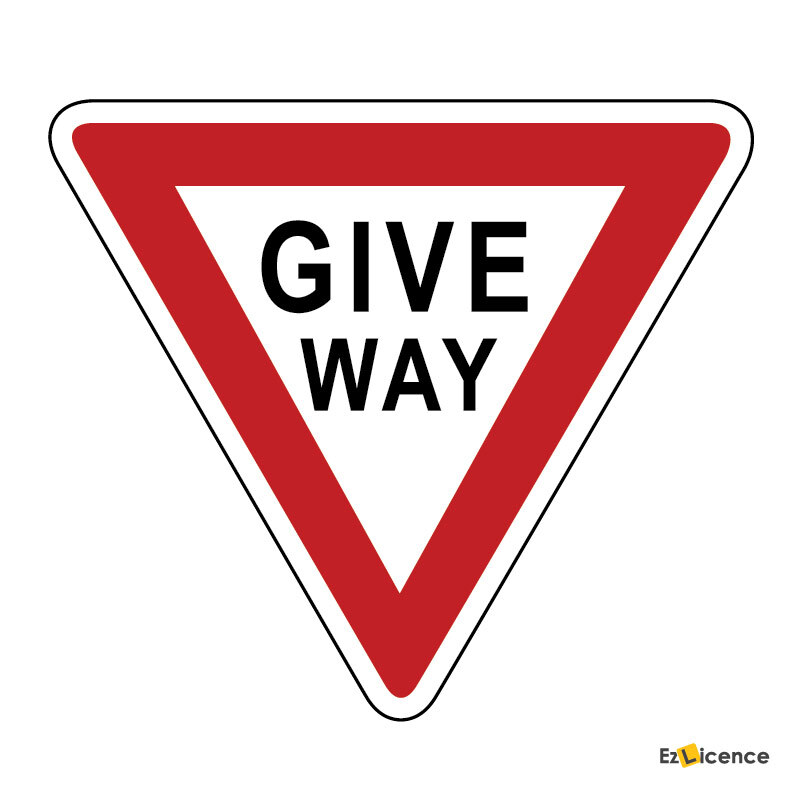
- You are intending to drive straight on at an intersection where this sign is displayed. What are you required to do? -> 53.9% incorrect response rate
- What is the closest distance you are allowed to park on the approach side to an intersection with traffic lights? -> 51.9% incorrect response rate
South Australian learners most often make mistakes on rules that demand careful judgement and spatial awareness. U-turns (58.8%), alcohol-related crash risks (55%), and braking distances at higher speeds (54.8%) all caused trouble, possibly because these questions require applying numeric or situational knowledge rather than just memorising rules.
Other commonly missed questions included those on approaching intersections (53.9% of attempts) and parking near traffic lights (51.9%). Learners also frequently got questions wrong on flashing yellow lights, roundabouts, and children’s crossings, with error rates between 45% and 39%.
The Categories SA Learners Fail The Most
| Rank | Category | Incorrect Response Rate |
|---|---|---|
| 1 | Speed Limits | 25.7% |
| 2 | Vehicle Positioning | 23.4% |
| 3 | Intersections & Right of Way | 20.0% |
| 4 | Licence Conditions & Restrictions | 18.9% |
| 5 | Parking & Stopping | 14.3% |
South Australian learners struggled most with speed limits (25.7% incorrect), followed by vehicle positioning (23.4%) and intersections and right-of-way (20%). Other problem areas included licence conditions and restrictions (18.9%) and parking and stopping (14.3%).
The Most Common Practice Theory Test Mistakes in Western Australia
Based on results from EzLicence’s WA practice Road Rules Theory Test, these were the questions learners most often answered incorrectly.
- What is the minimum distance a vehicle is allowed to park from a fire hydrant? -> 60.4% incorrect response rate
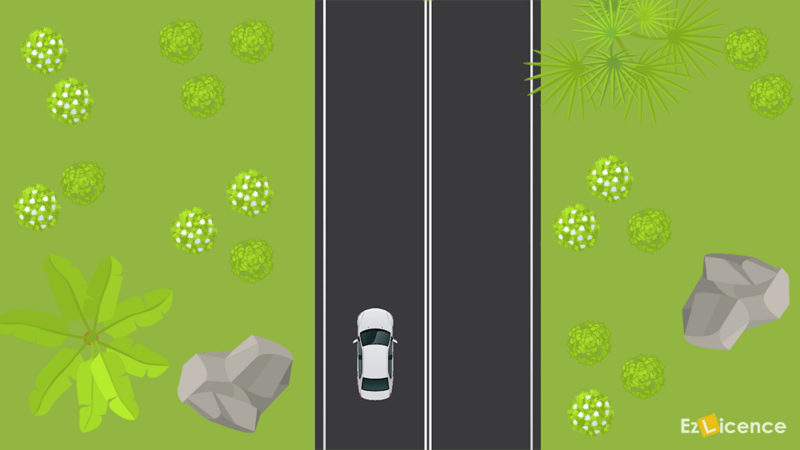
- Is a vehicle allowed to cross over a double unbroken white line (as shown in the diagram)? -> 56.4% incorrect response rate
- On a dry road and in good weather, what is the minimum gap you should allow between your vehicle and the one in front of you? -> 49.2% incorrect response rate
- What is the minimum distance a vehicle is allowed to park before a bus stop or pedestrian crossing? -> 43.5% incorrect response rate
- What is the minimum distance a vehicle is allowed to park from an intersection controlled by traffic lights? -> 43.5% incorrect response rate
Learners in Western Australia struggle most with parking rules and road positioning, with more than half of attempts incorrectly answering a question about minimum distances from a fire hydrant (60.4%). Other common errors involved crossing double unbroken white lines (56.4%) and maintaining safe gaps on dry roads (49.2%).
Other frequent fail points include parking near bus stops, intersections, and letterboxes, with failure rates ranging from 36.6% to 43.5%, as well as understanding vehicle order at intersections (42.5%) and positioning for right-hand turns on unmarked roads (42.6%).
The Categories WA Learners Fail The Most
| Rank | Category | Incorrect Response Rate |
|---|---|---|
| 1 | Night Driving & Visibility | 21.0% |
| 2 | Parking & Stopping | 21.0% |
| 3 | Speed Limits | 20.2% |
| 4 | Intersections & Right of Way | 18.4% |
| 5 | General | 15.4% |
In Western Australia, learners struggle most with night driving and visibility, and parking and stopping, with 21% of answers being incorrect. Speed limits were also a common problem, with an error rate of 20.2%, while intersections and right-of-way accounted for 18.4% of mistakes. General driving knowledge questions rounded out the top five, tripping up roughly one in seven attempts (15.4%).
The Most Common Practice Theory Test Mistakes in The Australian Capital Territory
Based on results from EzLicence’s ACT practice Road Rules Knowledge Test, these were the questions learners most often answered incorrectly.
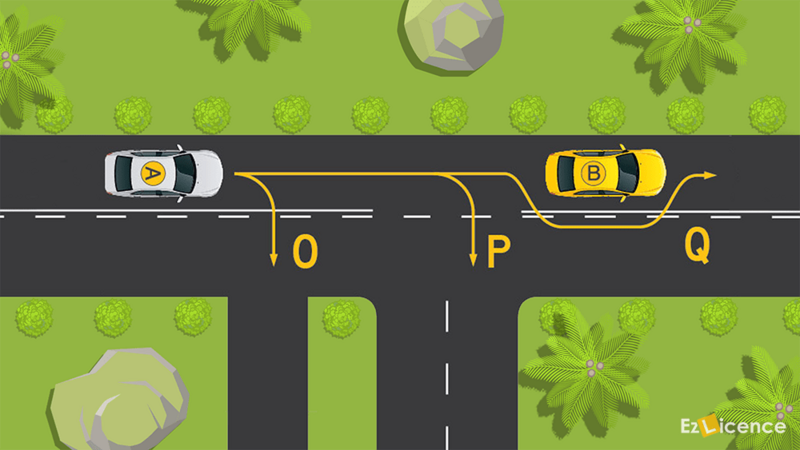
- Which movements shown in the diagram can legally be made by the driver of the car marked "A"? -> 43% incorrect response rate
- As a pedestrian, if you must walk along the road, where should you walk? -> 36.4% incorrect response rate
- One in three fatal crashes is speed-related. What is the speed limit where there are no speed limit signs and no street lights or buildings? -> 35.3% incorrect response rate
- Are personal mobility devices (e.g., Segway or Segway-type devices) allowed to be used on roads and road-related areas in the ACT? -> 34.4% incorrect response rate
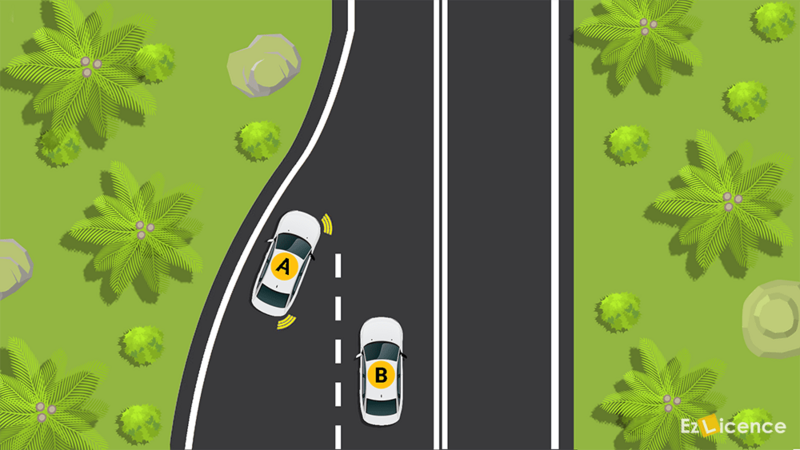
- You are in car marked A. You wish to overtake car marked B. What should you do? -> 33.1% incorrect response rate
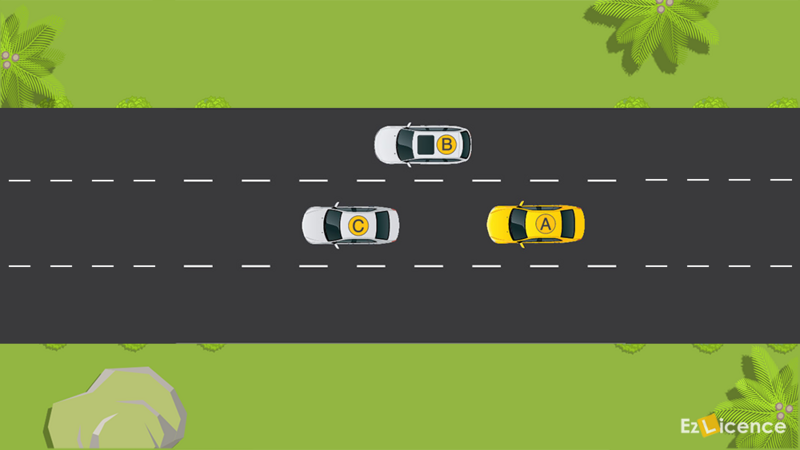
ACT learners struggle most with general driving rules, particularly the question about legal vehicle movements(43% incorrect). Other common mistakes included pedestrian safety (36.4% of answers), speed limits where no signs exist (35.3%), personal mobility devices (34.4%), and overtaking (33.1%).
Intersections and traffic situations also caused errors. Roundabout navigation had an error rate of 29.4%, giving way at unsigned intersections confused 29.2% of responses, slip lane left turns 25.5% of attempts, and both red light turns and alcohol processing time were answered incorrectly in 24.6% of cases.
The Categories ACT Learners Fail The Most
| Rank | Category | Incorrect Response Rate |
|---|---|---|
| 1 | Speed Limits | 16.1% |
| 2 | Intersections & Right of Way | 10.8% |
| 3 | Information Signs | 10.7% |
| 4 | Road Markings & Traffic Lights | 9.7% |
| 5 | Vehicle Positioning | 9.7% |
On a broader level, ACT learners most often struggle with speed limits (16.1%), followed by intersections and right-of-way (10.8%) and information signs (10.7%). Road markings, traffic lights, and vehicle positioning were also challenging (9.7%).
The Most Common Practice Theory Test Mistakes in Tasmania
Based on results from EzLicence's TAS practice Driver Knowledge Test, these were the questions learners most often answered incorrectly.
- You are driving a vehicle along a multi-lane road and the speed limit is 80Km/h or less, which lane should you travel in? -> 60.2% incorrect response rate
- You are driving a motor vehicle towards a marked multi-laned roundabout. You want to travel straight on through the roundabout to the road opposite. What lane must you take? -> 43.4% incorrect response rate
- What is the maximum speed an L licence holder can drive in a 100 km/h speed zone? -> 43.4% incorrect response rate
- How close to a pedestrian crossing can you legally park? -> 41% incorrect response rate
- What is the minimum recommended distance to leave between your vehicle and a cyclist when passing in a 50 km/h zone? -> 40.3% incorrect response rate
Tasmanian learners struggle most with lane use and speed limits, with 60.2% of responses on the top lane question being incorrect. Other common mistakes included navigating multi-lane roundabouts (43.4%) and maximum speeds for L licence holders (42.4%).
Learners also struggled with safe distances and parking rules, including passing cyclists (40.3%), following distances (40.2%), and parking near intersections or pedestrian crossings (31–41%).
The Categories TAS Learners Fail The Most
| Rank | Category | Incorrect Response Rate |
|---|---|---|
| 1 | Hazards | 26.1% |
| 2 | Speed Limits | 23.6% |
| 3 | Parking & Stopping | 22.4% |
| 4 | Overtaking & Lane Use | 19.2% |
| 5 | Road Markings & Traffic Lights | 18.1% |
Tasmanian learners struggle most with hazard-based questions (26.1% incorrect), followed by speed limits (23.6%) and parking and stopping (22.4%). Overtaking and lane use (19.2%) and road markings and traffic lights (18.1%) also caused frequent errors.
The Most Common Practice Theory Test Mistakes in Victoria
Based on results from EzLicence's VIC practice Learner Permit Knowledge Test, these were the questions learners most often answered incorrectly.
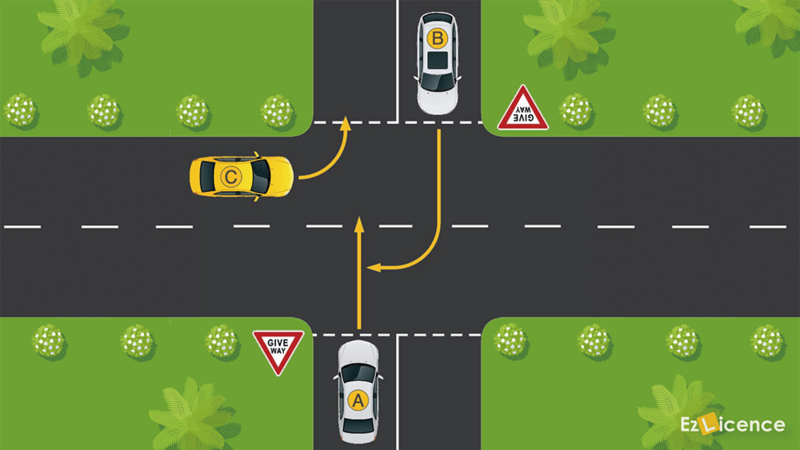
- You are driving vehicle A. Which vehicles must you give way to? -> 48.6% incorrect response rate
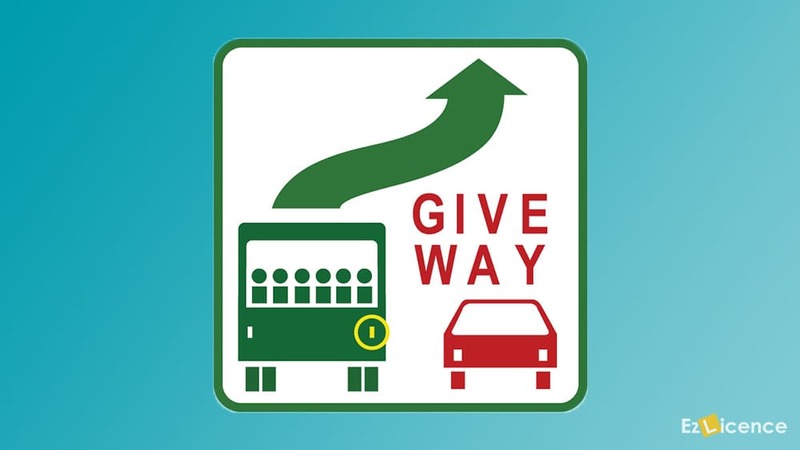
- This sign means that vehicles must give way to buses in built-up areas...a) at all times; b) only when the bus is changing lanes; c) only when the bus is about to pull out from the kerb into the left lane. -> 45.6% incorrect response rate
- How should you drive out of a bend in the road? -> 43.1% incorrect response rate
- You are driving at 100 km/h. What distance are you most likely to cover before you can stop? -> 42.4% incorrect response rate
- What is the speed limit on roads without speed limit signs outside built-up areas in Victoria? -> 41.8% incorrect response rate
Victorian learners struggle most with giving way rules, with an error rate of 48.6% on the top question and 45.6% of answers incorrect on yielding to buses. Roundabouts (35.9%) also caused frequent errors. Speed and stopping distances were another challenge, with mistakes on bends (43.1%), stopping at 100 km/h (42.4%), and roads without speed limit signs (42.1%).
Other issues included fuel use (41.8%), tunnel safety (38%), following distances (37.1%), and brake failure (37%), highlighting gaps in practical driving knowledge and road safety awareness.
The Categories VIC Learners Fail The Most
| Rank | Category | Incorrect Response Rate |
|---|---|---|
| 1 | Vehicle Equipment Use | 37.0% |
| 2 | Vehicle Positioning | 31.8% |
| 3 | Weather & Surface Conditions | 30.8% |
| 4 | Speed Limits | 26.1% |
| 5 | Parking & Stopping | 22.7% |
These test takers found vehicle equipment use the most challenging, with one in three (37%) answers mistaken. Vehicle positioning (31.8%) and adapting to weather and road conditions (30.8%) also proved difficult for learners. Mistakes on speed limits (26.1%) and parking and stopping (22.7%) rounded out the top five.
The Most Common Practice Theory Test Mistakes in Queensland
Based on results from EzLicence's QLD practice Road Rules Test, these were the questions learners most often answered incorrectly.
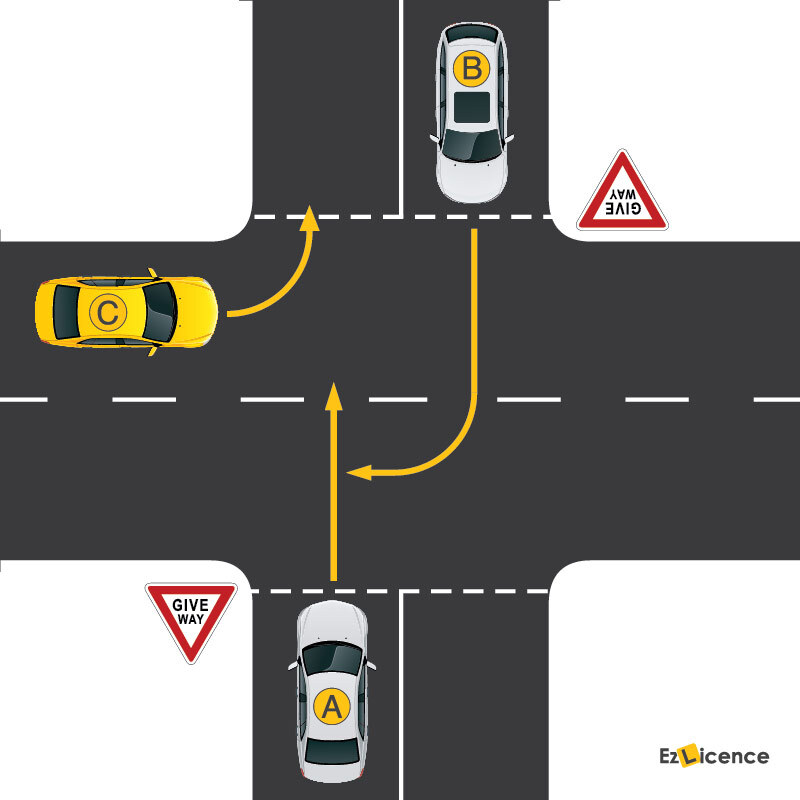
- You are driving vehicle A. Which vehicles must you give way to? -> 44.3% incorrect response rate
- When leaving a central parking area in the centre of the road, are you allowed to reverse out? -> 42.3% incorrect response rate
- Are you permitted to drive on or over tram tracks on a tramway? -> 41.8% incorrect response rate
- You are driving towards a marked multi-lane roundabout. You want to travel straight through the roundabout to the road opposite. What lane must you take? -> 40.2% incorrect response rate
- If you are under 25 years of age and on a P1 provisional licence, how many people under 21 years of age (that are not immediate family members) may be a passenger in your car between 11:00pm and 5:00am? -> 35.1% incorrect response rate
Giving way questions caused the most difficulty for Queensland learners, with an error rate of 44.3%. Other common mistakes involve parking and reversing (42.3%) and driving over tram tracks (41.8%). Roundabouts (40.2%) and passenger restrictions for P1 provisional drivers (35.1%) also caused difficulty. Learners struggled further with cyclist rules, intersection order, and right-of-way scenarios.
The Categories QLD Learners Fail The Most
| Rank | Category | Incorrect Response Rate |
|---|---|---|
| 1 | Licence Conditions & Restrictions | 20.9% |
| 2 | Hazards | 19.3% |
| 3 | Intersections & Right of Way | 18.4% |
| 4 | Road Markings & Traffic Lights | 18.2% |
| 5 | Parking & Stopping | 15.5% |
Licence conditions and restrictions caused the most difficulty, with 20.9% of answers incorrect. Other challenging areas include hazards (19.3%), intersections and right of way (18.4%), road markings and traffic lights (18.2%), and parking and stopping (15.5%).
Which States Struggle Most on The Practice Theory Test - And Why
Across Australia, certain topics consistently challenge learners - and even experienced drivers might find some questions tricky.
- South Australian learners often stumble on speed limits, vehicle positioning, and intersections.
- Western Australian learners struggle with parking rules and road positioning.
- Tasmanian learners find lane use and hazard perception hardest.
- New South Wales learners are challenged by night driving, intersections, and interpreting diagrams.
Many of these difficulties come from applying road rules in real-world scenarios, rather than just memorising them. Questions about giving way, roundabouts, and stopping distances test both knowledge and judgment. Differences in state tests - from unique signage to local laws - also mean some topics catch drivers out more than others.
Do these trends follow through for experienced drivers, too? Even seasoned motorists might struggle with the same tricky areas, showing that everyone can benefit from a refresher.
As Amanda Butler from EzLicence explains, “Driver Theory Tests aren’t just about memorising rules - they’re about applying them in real-world situations. Learners often struggle with giving way, roundabouts, and interpreting diagrams because these questions require both knowledge and practical judgement. Practising with a qualified driver helps turn that knowledge into confidence on the road.
Even experienced drivers, who have plenty of real-world practice, can still forget certain rules or develop habits that don’t fully align with the law. That’s why structured lessons and on-road experience go hand in hand - together they help you avoid bad habits and make sure the rules stick.”
Test Your Knowledge
Curious if you’d still pass your theory test today? Try five of the hardest questions from your state and see if your road rules knowledge is still up to speed.
Ready for the real challenge? Take our free practice learner test and see how you score.

Find a Driving Instructor Near You
Passed your theory test and ready to hit the road? Browse ratings & reviews for local instructors to find the perfect match near you:
- Sydney driving instructors
- Melbourne driving instructors
- Brisbane driving instructors
- Perth driving instructors
- Adelaide driving instructors
- Hobart driving instructors
- Canberra driving instructors
About The Data
The data contained within this research was obtained from the practice driver knowledge theory tests available on the EzLicence platform. Data from each state was gathered to highlight the topics and questions with the highest rates of incorrect responses as a tool to help learner drivers better understand areas for improvement.
The test questions are based on the real tests available for each state, and delivered in the correct format; therefore, each state includes different question banks.
Categorisations were created for the purpose of analysis on the test questions across all states based on their topic and were used for uniformity in order to compare and contrast between the regions. These categories are not the official categorisation used by each states’ licensing authority.
Please note that the response rates include data across all-time and from all users, which include re-takes.
The Northern Territory was excluded, as EzLicence does not currently operate there.

About the author